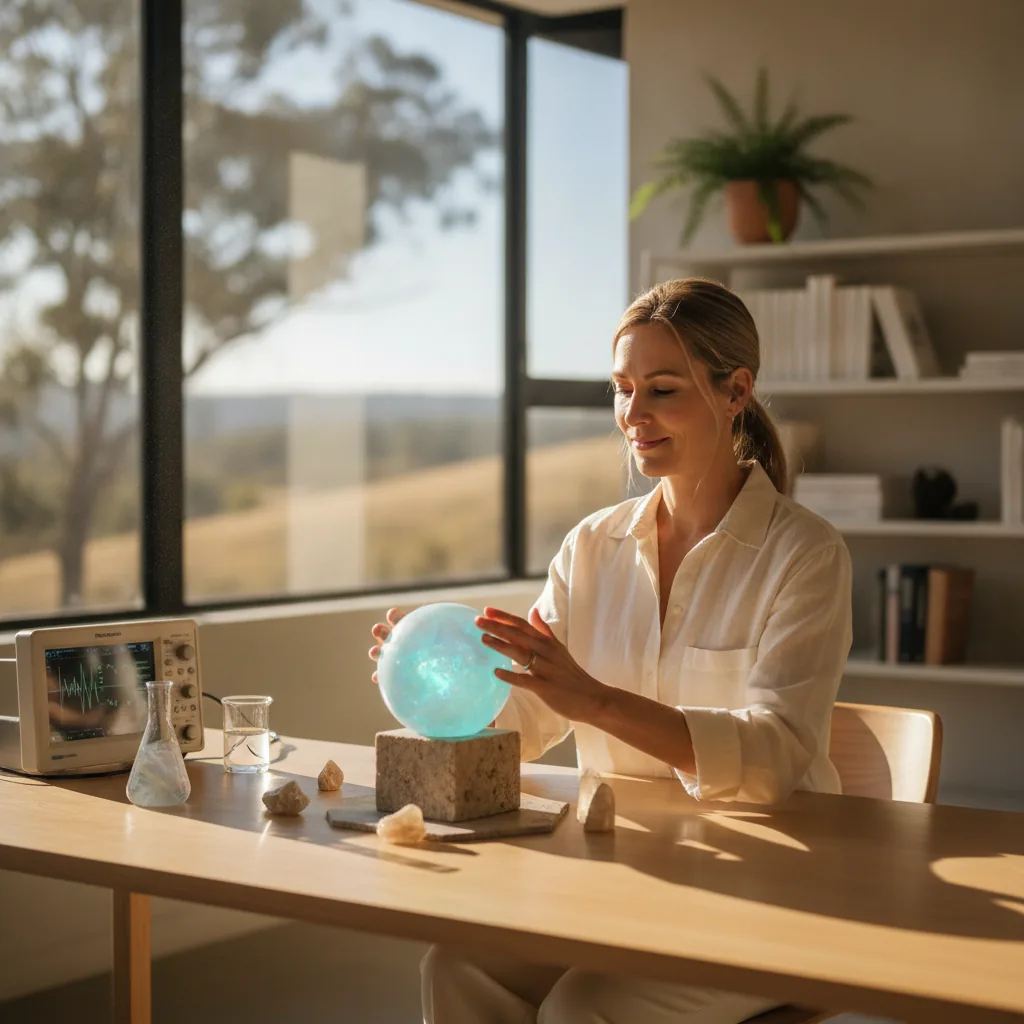
Energy Medicine: What the Research Says and How It Can Help
Energy medicine is a broad family of complementary approaches that work with the body’s biofield, nervous system, and energetic patterns to support physical, emotional, and mental wellbeing. While it sits outside conventional medicine, a growing body of peer-reviewed research suggests it can meaningfully reduce stress, ease pain, and improve quality of life when used alongside standard care.
What exactly is energy medicine?
Energy medicine refers to practices that influence the body’s energetic systems, including biofields, meridians, and the nervous system, to promote balance and self-healing. Techniques range from acupuncture and Reiki to tapping (EFT), therapeutic touch, and applied kinesiology-based systems like the Emotion Code and Body Code. All share the premise that imbalances in the body’s energy contribute to physical and emotional symptoms.
The term itself was popularised by researcher Donna Eden, whose decades of clinical observation helped shape much of the contemporary framework. At its core, energy medicine asks a simple question: what happens when we treat the body not just as a collection of tissues and chemistry, but as a dynamic, interconnected field of energy and information?
For many people, that question opens an entirely new conversation about why they still feel stuck, tired, anxious, or physically unwell despite doing all the “right” things. And that is precisely where energy medicine tends to find its most receptive audience.
What does the research say about energy medicine?
The research on energy medicine is still maturing, but the findings so far are genuinely encouraging. Multiple peer-reviewed studies have found that Emotional Freedom Techniques (EFT tapping), one well-studied form of energy medicine, produced statistically significant reductions in cortisol levels and psychological distress. A 2012 randomised controlled trial published in the Journal of Nervous and Mental Disease found EFT reduced cortisol by an average of 24 percent compared to control groups, alongside significant drops in anxiety, depression, and PTSD symptoms.
Biofield therapies more broadly have also attracted serious attention. A 2015 systematic review published in Global Advances in Health and Medicine examined over 60 clinical studies on biofield therapies and found moderate evidence for their effectiveness in reducing pain, fatigue, and anxiety, particularly in cancer care settings. The reviewers noted that the safety profile of these approaches is excellent, making them a low-risk adjunct to conventional treatment.
Acupuncture, arguably the most studied form of energy medicine, now has enough high-quality evidence behind it that it is recommended by bodies including the World Health Organization for a range of conditions including chronic pain and chemotherapy-induced nausea. This matters because it demonstrates that working with the body’s energetic pathways is not purely anecdotal territory.
It is worth being honest about the limits of the research, too. Many studies are small, methodologically varied, or difficult to double-blind (how do you give someone a placebo Body Code session?). Mainstream science continues to debate the precise mechanisms. But the consistent thread across the evidence is that people feel better, measurably and meaningfully, and that something real appears to be happening beyond placebo alone.
How does energy medicine work in practice?
In practice, energy medicine works by identifying and releasing imbalances that the body itself signals, often through methods like muscle testing (applied kinesiology), intention-based inquiry, or structured protocols that map areas of the body’s energy system. Sessions are typically gentle, non-invasive, and can be conducted in person or remotely, since the body’s energetic field is not constrained by physical proximity in the way that hands-on bodywork is.
The modalities vary considerably in their approach. Some focus primarily on emotional patterns held in the body. Others map imbalances across organs, pathogens, nutrition, misalignments, and circuits of energy. What they share is a respect for the body’s own intelligence and its capacity to move toward healing when underlying interference is cleared.
Remote or proxy sessions deserve a particular mention here, because they are often the first thing people raise a skeptical eyebrow at. Yet practitioners and clients consistently report outcomes from remote sessions that match or equal in-person work. The theoretical framework draws on concepts from quantum physics around non-locality and entanglement, though it is fair to say the science of exactly how this works is still catching up with the observed results. What practitioners know is that clients experience real shifts. That experiential evidence carries weight.
Who tends to benefit most from energy medicine?
Energy medicine tends to resonate most with people who feel something is “off” that conventional approaches have not been able to fully address. This might be persistent emotional heaviness, recurring physical symptoms without a clear diagnosis, anxiety that does not quite lift, or a sense of being stuck in patterns that repeat no matter how much conscious effort is applied.
It also appeals to people who are already on a wellness path and want to go deeper. People who have done therapy, who eat well, who move their bodies, but who feel there is a layer beneath all of that which has not yet been touched. That intuition is often right. Trapped emotions, inherited energetic patterns, and deeply held limiting beliefs can sit below the level where talk therapy or lifestyle changes reach.
Children, animals, and highly sensitive people often respond especially quickly and visibly to energy work. This is sometimes offered as anecdotal evidence that the effects are not purely about expectation or placebo, since young children and animals have no framework for believing in or anticipating the process.
Of course, energy medicine is not a replacement for medical or psychological care. Anyone navigating a serious health condition should always keep their qualified healthcare team in the loop and treat energy work as a complement rather than an alternative. The two can coexist beautifully.
How does the Body Code fit into the wider energy medicine landscape?
The Body Code, developed by Dr. Bradley Nelson, is one of the most comprehensive energy medicine systems available today. It builds on the Emotion Code (which focuses specifically on identifying and releasing trapped emotional energies) and expands into a full map of six categories of potential imbalance: energies, circuits and systems, toxicity, pathogens, structural issues, and nutrition and lifestyle factors.
A Body Code session uses muscle testing as a form of biofeedback to ask the subconscious mind where imbalances lie, and then uses focused intention and magnetic energy (typically passed along the governing meridian) to release them. It is precise, systematic, and deeply personal. No two sessions look alike because no two people carry the same map of stored experience.
Within the energy medicine landscape, the Body Code stands out for its scope. Where many modalities focus on one dimension of the body’s system, the Body Code moves across all of them, treating the whole person rather than a single symptom or layer. This makes it particularly useful for people who have tried many things and feel their situation is complex or multi-layered.
At Zoe Bentley Healing, the Body Code is offered alongside the Emotion Code, Belief Code, yoga therapy, and holistic counselling, creating a genuinely integrated approach to wellbeing. Whether you come with a specific concern or simply a feeling that something needs to shift, the work meets you exactly where you are.
If you are curious about what energy medicine could do for you, the next step is simple. Book a Body Code session with Zoe Bentley Healing.