Can’t Find Somatic Yoga Near Me? What to Look for Online
If you have been searching for somatic yoga near me and coming up short, you are not alone. Somatic yoga blends slow, inward-focused movement with body-awareness practices to help release stored tension and trauma from the nervous system. While local studios can be hard to find, online sessions now offer the same depth of practice from the comfort of your own home.
What is somatic yoga and why is it different from a regular yoga class?
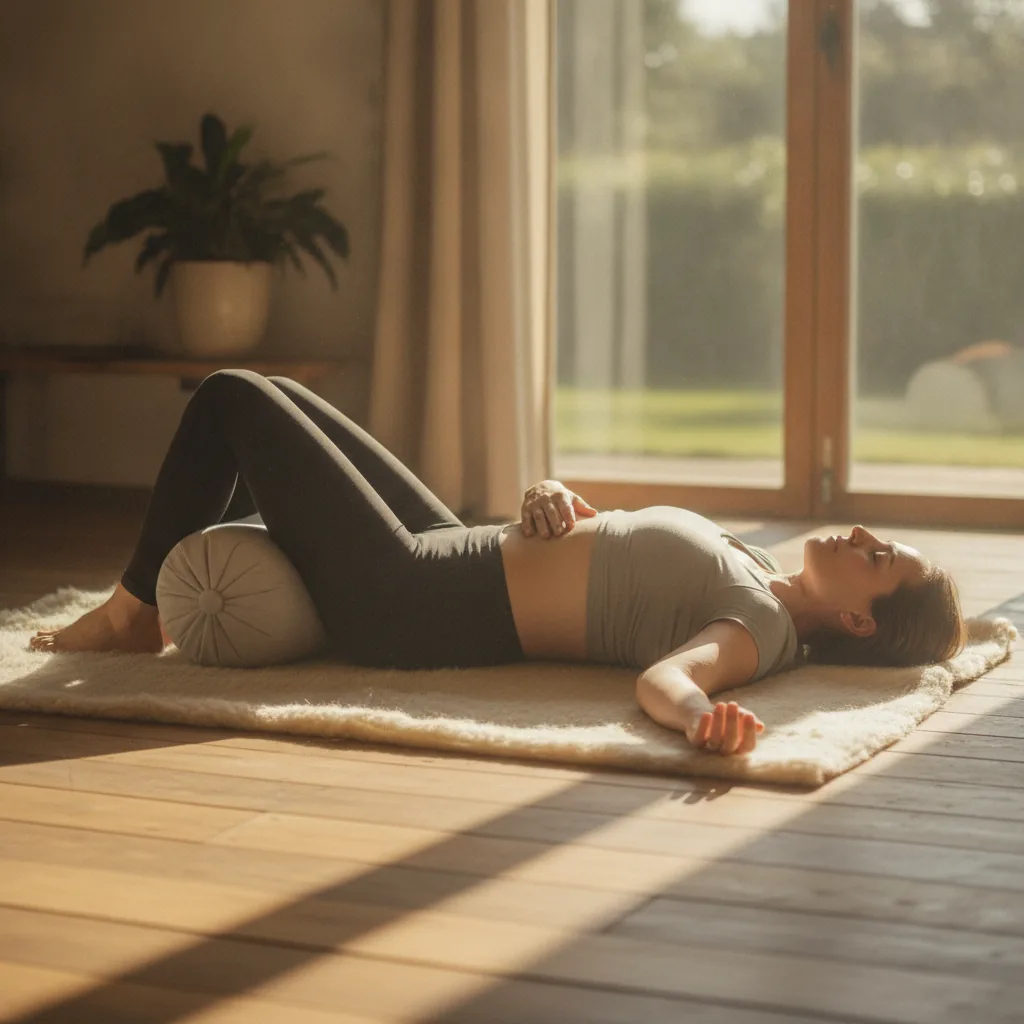
Somatic yoga is a body-centred approach that prioritises inner sensation over outer form. Rather than working toward a perfect pose, the practice invites you to slow down, notice how each movement feels from the inside, and gently re-educate your nervous system. Sessions typically include slow pandiculation (conscious muscle contraction and release), breathwork, and guided body-scanning. The result is less about flexibility and more about building a felt sense of safety in your own body, which is why so many people find it profoundly settling rather than simply energising.
Traditional yoga classes are often structured around a sequence of postures performed in a particular way, with the teacher cuing alignment from the outside in. Somatic yoga flips that around. The teacher guides your attention inward, asking questions like “what do you notice in your hips right now?” rather than “straighten your knee.” That shift in attention is small but significant. Research into somatic approaches, including foundational work by Thomas Hanna who coined the term “somatics” in 1976, consistently points to the value of this inside-out awareness for reducing chronic muscular holding patterns and improving proprioception.
Why is somatic yoga near me so hard to find at a local studio?
Somatic yoga is a specialised modality, and most general yoga studios focus on the broader market demand for vinyasa, hot yoga or pilates-style classes. Trained somatic yoga facilitators are relatively rare because the qualification pathway draws from multiple disciplines, including somatic psychology, trauma-informed care and classical yoga therapy, so fewer teachers complete it. That supply gap is exactly why the search for somatic yoga near me often leads to a dead end, especially outside major metropolitan areas.
There is genuinely good news in this, though. Because somatic yoga is fundamentally about internal experience rather than hands-on physical adjustment, it translates exceptionally well to online delivery. You do not need a teacher to physically correct your alignment. You need a skilled guide who can hold space, read your cues and pace the practice to your nervous system. A thoughtful online session can do all of that. In fact, many practitioners find that working from their own living room, surrounded by familiar surroundings and with no commute to manage, actually deepens the felt sense of safety that somatic work depends on.
What should you look for when choosing an online somatic yoga session?
When you cannot find somatic yoga near me locally and turn to online options, a few markers help you separate genuinely therapeutic offerings from standard yoga classes relabelled with the word “somatic.” Look for a facilitator who mentions trauma-informed practice, nervous system regulation, or bottom-up processing. Their language should centre your experience, not their method. They should invite you to rest or modify at any point rather than push through discomfort.
Practical things to check:
- Qualifications and lineage. Has the teacher completed formal training in yoga therapy, somatic psychology, or a recognised body-based modality? Reputable yoga therapy training programmes, such as those accredited by the International Association of Yoga Therapists (IAYT), require a minimum of 800 hours of training, which is considerably more depth than a standard 200-hour yoga teacher certification.
- Session structure. A genuinely somatic session will move slowly and include significant stillness. If the class moves at a pace that leaves no room for internal noticing, it is probably not somatic in the true sense.
- The intake process. A responsible practitioner asks about your health history, current stress levels and any trauma considerations before you begin. This is not bureaucracy. It is care.
- Clear scope of practice. Honest practitioners are upfront that somatic yoga is a complementary wellbeing service, not a replacement for medical or psychological care. That transparency is a green flag, not a limitation.
It is also worth paying attention to how you feel after a session, not just during it. Somatic work can bring up unexpected emotion or fatigue as the body processes what it has been holding. A skilled facilitator will prepare you for this and offer guidance on how to resource yourself afterward.
How does yoga therapy relate to somatic yoga, and can it help in the same way?
Yoga therapy and somatic yoga share significant common ground. Both are trauma-informed, both work with the nervous system rather than against it, and both prioritise your individual experience over a one-size-fits-all sequence. Yoga therapy, as a distinct professional field, applies the tools of yoga (movement, breath, meditation, philosophy) to specific health and wellbeing goals, typically in a one-to-one or small group setting rather than a general class. This individualised container is actually closer to the spirit of somatic yoga than most studio classes, because the session can be tailored entirely to what your body and nervous system need on a given day.
If you have been drawn to somatic yoga because you are carrying chronic tension, anxiety, grief, burnout or the residue of difficult life experiences, a personalised yoga therapy session may give you exactly what you were hoping a somatic yoga class would provide. You get a practitioner who listens, adapts and works at the pace of your body rather than a fixed class plan.
Zoe Bentley Healing offers online Yoga Therapy sessions that work in precisely this way: slow, attentive, body-led and held within a genuinely warm and trauma-informed space. Whether you are new to yoga entirely or you have been practising for years and sense there is something deeper available to you, sessions are shaped around where you are right now.
If your search for somatic yoga near me has left you without a local option, you do not have to settle for a generic class or go without support altogether. The work you are looking for is available, and it is closer than you think. Book an online Yoga Therapy session with Zoe Bentley Healing.