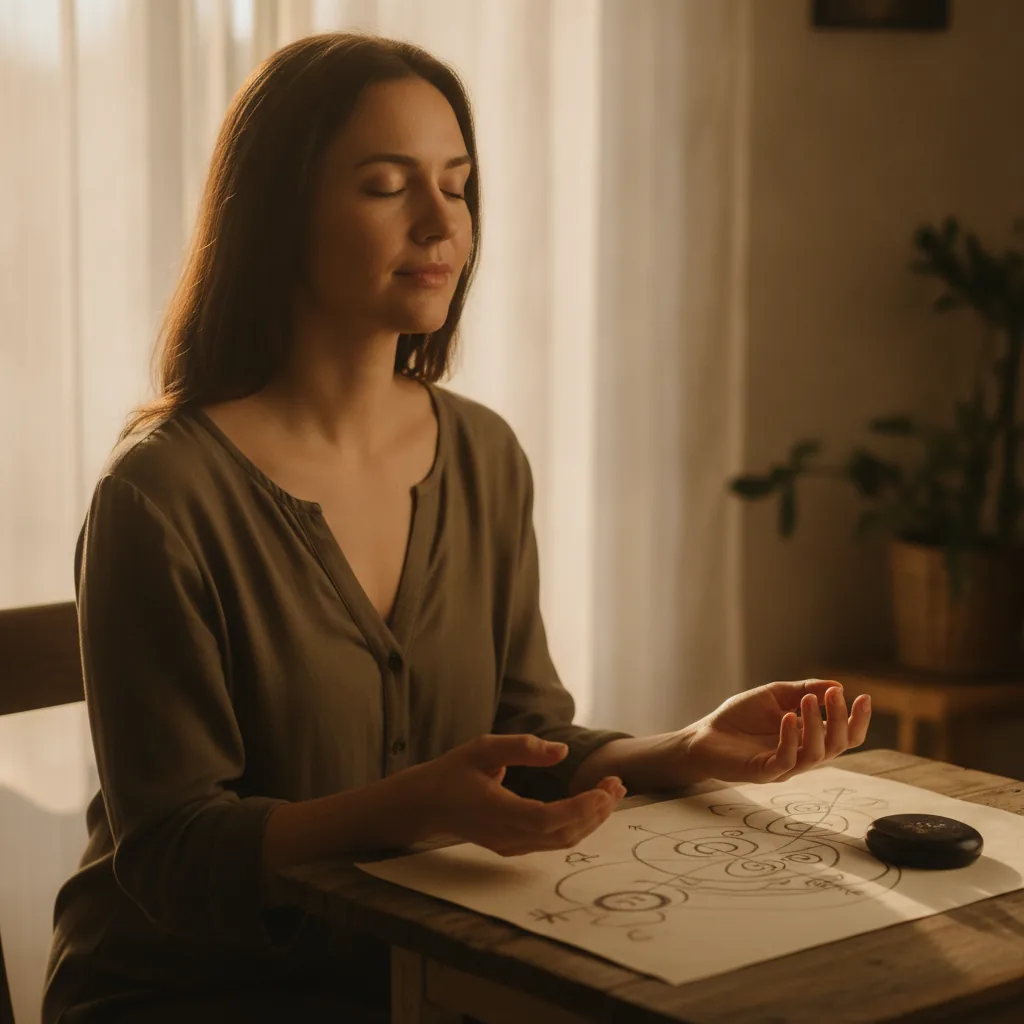
What Does an Emotion Code Practitioner Do and Who Can Benefit?
Emotion code practitioners use muscle testing to identify trapped emotional energies stored in the body, then release them using a magnet or intention drawn along the governing meridian. Sessions are gentle, non-invasive and can be done remotely. They are used to ease emotional heaviness, physical tension and recurring patterns that have not shifted through other approaches.
What exactly is the Emotion Code and where did it come from?
The Emotion Code is an energy healing method developed by Dr Bradley Nelson, a chiropractor who noticed that unresolved emotional experiences seemed to lodge in the body as distinct energetic disturbances. He published his findings in his book The Emotion Code (first released in 2007), and the method has since been adopted by practitioners worldwide. At its core, the idea is straightforward: emotions are not just feelings that pass through the mind. They carry a frequency, and when they are not fully processed, that frequency can become stuck, influencing how the body feels and how the nervous system responds to life.
The Emotion Code uses a chart of 60 emotions organised into columns and rows. A practitioner works through this chart using applied kinesiology, commonly called muscle testing, to identify which specific emotion is trapped, when it was formed, and sometimes whose emotion it originally was. That last point matters because some trapped emotions are inherited, passed down through generations or absorbed empathically from people around us.
Once identified, the emotion is released by running a magnet (or the practitioner’s intention in a proxy session) along the governing meridian three times. It is a quick, quiet process. Many clients describe feeling a subtle shift, a sense of lightness or relief, in the hours and days that follow.
How does an emotion code practitioner actually work during a session?
An emotion code practitioner begins by establishing a clear connection with the client’s subconscious mind, which is understood to hold a complete record of every experience and every emotion ever felt. The practitioner then uses muscle testing, either directly on the client or through proxy (which allows sessions to happen over video call or phone), to ask yes or no questions and receive responses from the body itself.
This process is surprisingly methodical. The practitioner moves through the chart systematically, narrowing down which column and row contains the trapped emotion, then confirming it with follow-up questions. Context sometimes surfaces too: the approximate age when the emotion was created, whether it belongs to the client or was inherited, and whether it has formed part of what Dr Nelson calls a Heart Wall, a layered barrier of trapped emotions the subconscious builds around the heart for protection.
A Heart Wall is one of the more significant concepts in Emotion Code work. Research conducted by Dr Nelson’s team suggested that a large proportion of people carry one, built up across years of loss, rejection or grief. Releasing Heart Wall layers over a series of sessions is often associated with clients feeling more open, more connected in their relationships and less emotionally guarded.
Sessions typically run between 45 and 60 minutes. Because the process is done entirely through communication and intention, there is no need to relive painful memories or recount difficult experiences in detail. Many people find this a relief, particularly those who have found talk-based approaches re-traumatising or emotionally exhausting.
Who tends to benefit most from working with emotion code practitioners?
People who benefit most from emotion code practitioners are often those carrying a sense of emotional weight they cannot quite name, those stuck in repeating patterns in relationships or health, or those who feel they have done a great deal of personal work yet something still feels blocked. The method is gentle enough for children and sensitive adults, and because it can be delivered remotely, it is accessible regardless of location.
Some of the people who find their way to Emotion Code work include:
- Those processing grief, loss or a significant life change who feel the emotional weight has settled into the body rather than moving through it.
- People experiencing chronic tension or discomfort who want to explore whether an emotional component might be contributing, alongside any care they are already receiving from their healthcare team.
- Individuals who feel emotionally shut down, struggle with trust, or notice they keep attracting similar dynamics in relationships.
- Parents and caregivers who want support for themselves, and sometimes for children who are too young to articulate what they are carrying.
- Anyone curious about energy healing who wants a structured, systematic approach rather than something purely intuitive.
It is worth being clear: Emotion Code sessions are a complementary wellbeing practice. They are not a substitute for medical, psychological or psychiatric care, and a thoughtful practitioner will always encourage you to work alongside, not instead of, qualified healthcare professionals where that is relevant to your situation.
What should you look for when choosing an emotion code practitioner?
When choosing an emotion code practitioner, look for someone who is certified through the Discover Healing training pathway (the organisation founded by Dr Bradley Nelson), who communicates clearly about what sessions involve and do not involve, and who approaches the work with genuine warmth rather than making sweeping promises about outcomes.
Certification matters because it ensures the practitioner has completed structured training in both the method and its ethical application. Beyond credentials, the quality of the relationship plays a real role. Energy healing work asks you to be a little open and a little trusting, and that is easier when the person holding the space feels calm, grounded and genuinely interested in your wellbeing.
It is also worth asking whether the practitioner integrates other modalities. Emotion Code is powerful on its own, but many people find that combining it with the Body Code (a broader system that addresses structural, nutritional and other imbalances alongside emotional ones) or with holistic counselling deepens the results. A practitioner who holds multiple tools can meet you where you are rather than fitting you into a single framework.
Proximity is no longer a barrier. Proxy sessions, where the practitioner uses themselves as a stand-in for the client during muscle testing, are widely used and considered equally effective by practitioners trained in the method. This means you can work with someone who feels like a genuine fit, wherever they are located.
How is the Emotion Code different from talk therapy or other energy modalities?
The Emotion Code differs from talk therapy because it does not require you to consciously recall or narrate painful experiences. Instead of processing emotions through the thinking mind, it works directly with the body’s energetic record, which means the subconscious does the navigating and the client does not need to know intellectually what is being released for a shift to occur.
Compared to broader energy modalities like Reiki or acupuncture, the Emotion Code is more structured and specific. Rather than working generally with energy flow, a practitioner identifies a precise emotion, a precise location in the body where it is held, and releases it deliberately. Many people who have tried other approaches and found them too vague appreciate this precision.
The Emotion Code also sits alongside other structured systems. The Body Code expands the framework to include physical systems, toxins, pathogens and structural imbalances. The Belief Code, the newest addition to Dr Nelson’s work, targets the subconscious belief systems that sit underneath emotional patterns. Together, these three systems form a layered approach to wellbeing that addresses the person at multiple levels rather than just one.
For those drawn to holistic healing, the Emotion Code can feel like a missing piece, a way to address what the body is holding rather than only what the mind can articulate. Combined with practices like yoga therapy or holistic counselling, it becomes part of a genuinely integrated approach to feeling well.
If any of this resonates, and you are ready to explore what might be ready to shift, Book an Emotion Code session with Zoe Bentley Healing.