Can’t Find Yoga Therapy in Sydney? Here’s How to Access It Online
Yoga therapy in Sydney can be surprisingly hard to find in a format that truly suits you. Unlike a group class, yoga therapy is a one-on-one, clinically informed practice that tailors breathwork, movement and meditation to your specific health needs. The good news is that online sessions now make this specialised support available to anyone in Australia, regardless of location.
What exactly is yoga therapy, and how is it different from a regular yoga class?
Yoga therapy is an individualised, evidence-informed practice that draws on yoga’s tools (posture, breathwork, meditation and guided relaxation) to support a person’s physical, emotional or mental health goals. Unlike a drop-in class where the teacher leads a group through a set sequence, a yoga therapist works one-on-one, listening carefully to your history and adapting every element of the session to what your body and nervous system actually need right now.
The International Association of Yoga Therapists (IAYT) defines yoga therapy as “the process of empowering individuals to progress toward improved health and wellbeing through the application of the teachings and practices of yoga.” That distinction matters. A standard vinyasa class might leave you feeling energised and stretched; a yoga therapy session might help you explore why chronic tension keeps returning to your shoulders, or gently support your nervous system through a period of anxiety or grief.
Sessions often draw on an understanding of the autonomic nervous system, with specific practices chosen to shift the body out of a stress response and into a state where healing and self-regulation feel possible again. For people living with chronic pain, burnout, trauma histories or long-term health conditions, that level of tailoring can make an enormous difference.
Why is yoga therapy in Sydney so difficult to find in person?
Finding a qualified yoga therapist in Sydney, one who holds proper training rather than just a standard yoga teacher certification, can take considerably more effort than finding a pilates studio or gym. The pool of practitioners with dedicated yoga therapy training is smaller, availability is often limited, and the suburbs where they’re based may simply not be convenient for your schedule or location.
Sydney’s traffic and commute times are a very real barrier. If you live on the Northern Beaches, the South Coast commuter belt, or anywhere in western Sydney, travelling across the city for a single session every week or fortnight is a genuine obstacle. Add in the cost of parking, the mental load of rushing from work, and the irony of arriving at a relaxation-focused appointment already frazzled, and it’s easy to see why so many people simply give up searching.
There’s also the matter of finding someone whose approach genuinely resonates with you. Yoga therapy works best when there’s real trust and rapport. Limiting your search to a five-kilometre radius means you might settle for a practitioner who isn’t the right fit, rather than the one who truly understands what you’re going through.
How does online yoga therapy work in practice?
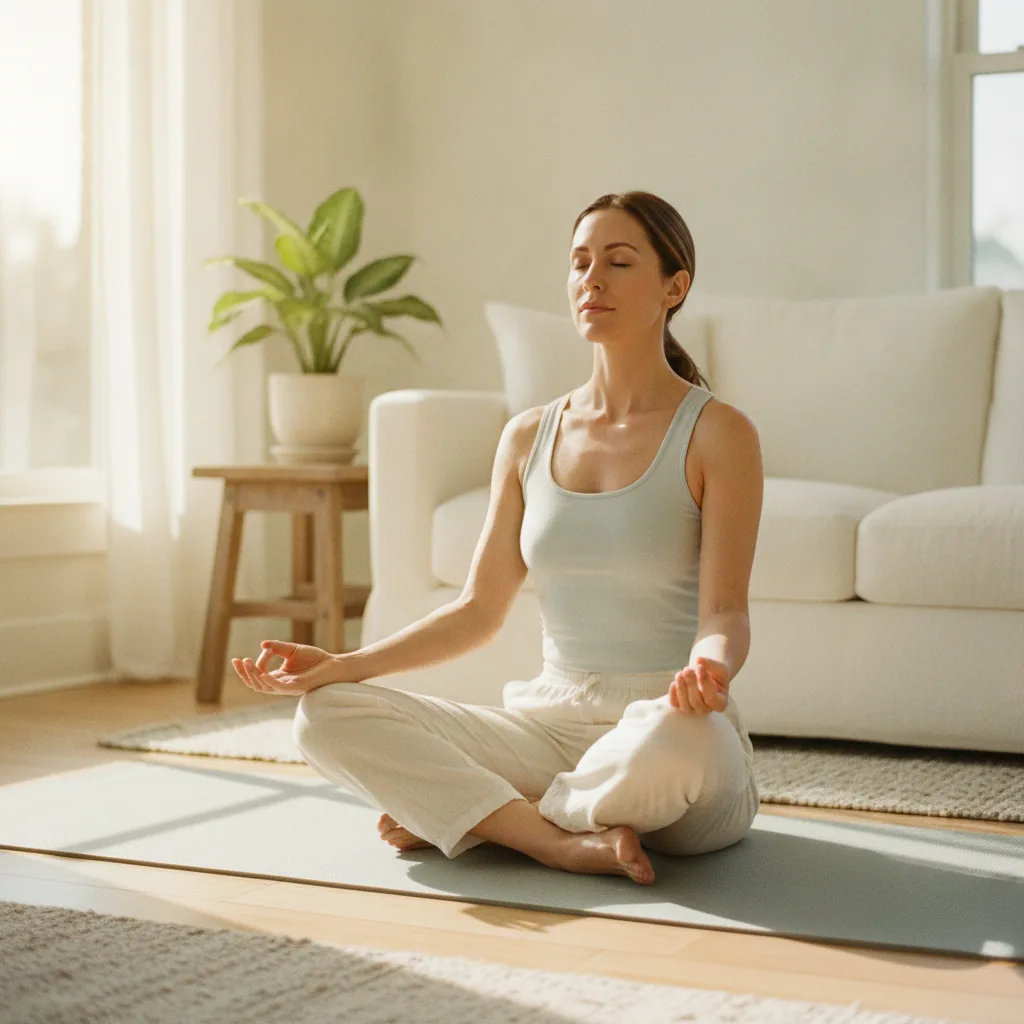
Online yoga therapy works through a video call where you and your practitioner meet in real time, just as you would in person, but from the comfort of your own home. You’ll need a small amount of floor space, a yoga mat if you have one (though it’s not always essential), and a stable internet connection. The session unfolds as a conversation and a guided practice: the therapist observes, asks questions, and adjusts recommendations just as they would face-to-face.
Research and practitioner experience consistently show that online delivery does not significantly diminish the therapeutic relationship or the outcomes. In fact, many clients find they settle into sessions more quickly at home, where they already feel safe and comfortable. There’s no need to navigate unfamiliar studio spaces, no awkward changing rooms, and no performance anxiety about doing poses “correctly” in front of others.
A typical session might begin with a brief check-in about how you’ve been since you last spoke, move into some guided breathwork to settle the nervous system, include tailored movement or restorative postures, and close with a short meditation or body scan. Between sessions, your therapist may offer simple home practices, specific breathing exercises, or gentle journaling prompts to support the work you’re doing together.
Who tends to benefit most from yoga therapy sessions?
People come to yoga therapy for a wide range of reasons, and most find it most useful when they feel like they’ve tried “the usual routes” without lasting relief. Common reasons include managing chronic pain or tension that doesn’t fully resolve with physiotherapy alone, navigating anxiety or overwhelm that feels stuck in the body, processing grief or life transitions, supporting recovery from burnout, or simply wanting a more holistic, whole-person approach to their wellbeing.
It’s also a genuinely welcoming modality for people who have never done yoga before, or who have been put off by the physical intensity of mainstream yoga classes. Because everything is adapted specifically for you, there is no “right” level of flexibility, fitness or experience required. Sessions can be as gentle or as dynamic as is appropriate for where you are right now.
For those already working with other practitioners, whether a psychologist, GP, physiotherapist or naturopath, yoga therapy sits comfortably alongside that care. It’s a complementary support, not a replacement for medical or mental health treatment, and a thoughtful yoga therapist will always encourage you to maintain those professional relationships.
What should you look for when choosing an online yoga therapist?
Training and credentials are the first thing to check. Look for a practitioner who has completed dedicated yoga therapy training beyond a standard 200-hour teacher training. Membership with a professional body such as the IAYT or Yoga Australia’s yoga therapy pathway is a useful indicator of that commitment to ongoing education and ethical practice.
Beyond credentials, pay attention to how the practitioner communicates. Do they ask questions and actually listen, or do they move quickly into prescribing a sequence? Do they feel warm, curious and non-judgmental? The therapeutic relationship is central to the work, and the right fit will feel clear fairly early on.
It’s also worth asking about their specific experience with whatever you’re navigating. Someone who has worked extensively with anxiety and nervous system dysregulation will bring a different depth of knowledge than someone whose focus is primarily sports recovery. A brief discovery call before committing to a series of sessions is a simple way to find out.
How does Zoe Bentley Healing support your wellbeing online?
At Zoe Bentley Healing, yoga therapy is offered as a core part of an integrated, whole-person approach to wellbeing. Sessions are held online, which means clients across Sydney and all of Australia can access personalised support without the friction of commuting or geography. Zoe brings genuine warmth, deep listening and a trauma-informed perspective to every session, creating a space where you feel genuinely met rather than assessed.
Yoga therapy sits alongside Emotion Code, Body Code, Belief Code and holistic counselling within the Zoe Bentley Healing practice. For many clients, combining these modalities offers a fuller picture of what’s driving patterns of tension, emotional heaviness or stuck thinking. The work is gentle, collaborative and paced entirely around you.
Whether you’re based in Sydney, regional New South Wales, or elsewhere in Australia entirely, online sessions remove the barriers that have previously made quality yoga therapy hard to access. All you need is a quiet space, an open mind and the willingness to show up for yourself.
Ready to experience what personalised yoga therapy can feel like? Book a Yoga Therapy session online with Zoe Bentley Healing.