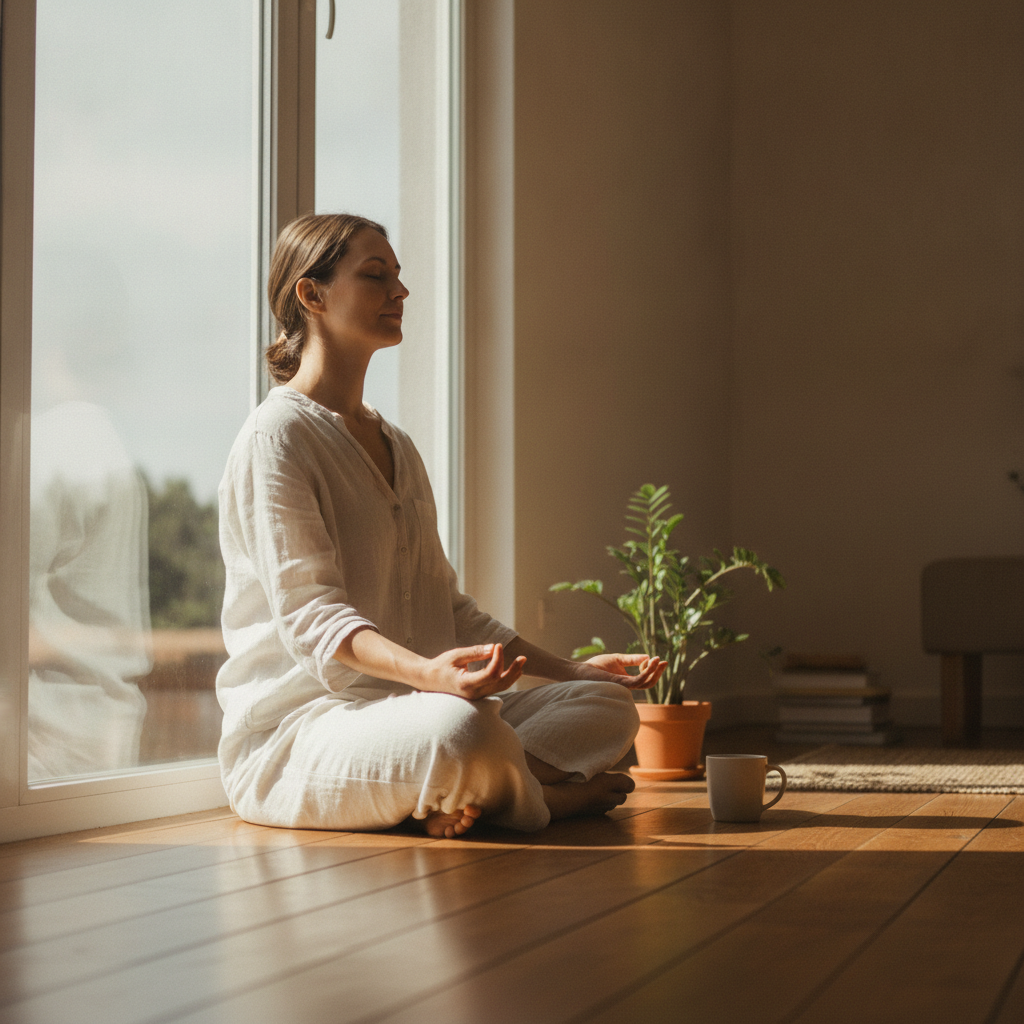
Meditation for Nervous System Regulation: A Simple Guide
Meditation for nervous system regulation works by shifting your body out of a stress-activated state and into a calmer, more resourced one. Regular practice trains the vagus nerve, lowers cortisol, and builds your capacity to recover from stress more quickly. Even short daily sessions of five to ten minutes can produce measurable change in how your body responds to difficulty.
What does the nervous system actually do, and why does it get dysregulated?
Your nervous system is the body’s master communication network, constantly scanning your environment for safety or threat and adjusting your physiology accordingly. Dysregulation happens when the stress response stays switched on long after the original threat has passed, leaving you wired, exhausted, anxious or emotionally flat. Modern life, unprocessed emotional experiences and stored tension in the body can all keep the system stuck in this pattern.
The autonomic nervous system has two main branches. The sympathetic branch is your accelerator: it mobilises energy, raises heart rate and sharpens focus in the face of danger. The parasympathetic branch, including the ventral vagal pathway described in Stephen Porges’ Polyvagal Theory, is your brake: it signals safety, slows the heart, and supports digestion, connection and rest. When these two branches work together in balance, you feel grounded, responsive and resilient. When sympathetic activation dominates for too long, the body pays a price.
Emotion, memory and physical sensation are all stored in the body. This is why stress is not just a mental experience. Tight shoulders, a clenched jaw, shallow breathing and a constantly racing mind are all nervous system signals. Addressing regulation at the body level, not just the thought level, is what makes somatic and contemplative practices so effective.
How does meditation for nervous system regulation actually work?
Meditation for nervous system regulation works primarily through the breath and attention. Slow, deliberate breathing, particularly with an extended exhale, directly stimulates the vagus nerve and activates the parasympathetic branch. Sustained, non-reactive attention trains the prefrontal cortex to override threat responses that originate in the amygdala, helping the body learn, over time, that it is safe to settle.
Research published in the journal Frontiers in Human Neuroscience found that long-term meditators show greater heart rate variability (HRV) than non-meditators. HRV is one of the clearest physiological markers of a well-regulated nervous system: the higher your HRV, the more flexibly and efficiently your body can move between states of activation and rest. This is not an abstract benefit. Greater HRV is associated with better emotional resilience, improved immune function and lower levels of chronic inflammation.
Meditation also works through interoception, which is your ability to sense what is happening inside your own body. Many people who carry chronic stress have actually become less attuned to their internal signals, not more. Mindfulness-based practices gently rebuild that connection, so you begin to notice tension, constriction or agitation earlier, before it escalates. Think of it as turning up the volume on a quiet signal you have been ignoring.
Which meditation techniques are most effective for calming the stress response?
Several meditation techniques have strong evidence and broad practical appeal for nervous system regulation. The best one is always the one you will actually do, but some approaches have particular physiological relevance.
Diaphragmatic breathing with an extended exhale. This is the foundation. Inhaling for four counts and exhaling for six to eight counts activates the vagus nerve directly. You do not need to call it meditation for it to work. Five minutes of this before a stressful event can meaningfully reduce cortisol reactivity.
Body scan meditation. Lying down or sitting comfortably, you move attention slowly through the body from feet to crown, noticing sensation without trying to change it. This practice rebuilds interoceptive awareness and teaches the nervous system that stillness is safe rather than threatening.
Open awareness or resting meditation. Rather than focusing on one anchor such as breath, you allow awareness to rest openly with whatever arises: sound, sensation, thought, space. This approach suits people who find a tight breath focus uncomfortable, which is common when the nervous system is in a high-alert pattern.
Loving-kindness (metta) meditation. Silently repeating phrases of goodwill toward yourself and others activates social engagement circuits within the parasympathetic system. A 2013 study by Barbara Fredrickson and colleagues found that a seven-week loving-kindness programme increased participants’ sense of social connection and positive emotion, both of which are markers of ventral vagal activation.
Movement-based mindfulness. Yoga, qi gong and walking meditation integrate breath, attention and gentle movement. For people whose stress lives primarily in the body as tension or numbness, movement often opens a door that seated stillness cannot.
How do you build a meditation practice that actually sticks?
Building a consistent meditation practice for nervous system regulation comes down to three things: starting smaller than feels meaningful, anchoring the practice to an existing habit, and treating the wobbles as part of the process rather than evidence of failure. Five consistent minutes daily will do more for your nervous system than forty minutes once a fortnight.
A few practical foundations worth considering:
- Choose a consistent time. Morning before the day accelerates, or evening as a deliberate transition out of work mode, both work well. Consistency trains the nervous system to anticipate the shift, which deepens the effect over time.
- Lower the bar on what counts. Three conscious breaths before a meal is regulation. Sitting quietly for two minutes after the school run is regulation. You are not aiming for a pristine 30-minute sit; you are building a relationship with your own body.
- Notice what you feel, not just what you think. After each session, pause for thirty seconds and check in with your body. Is there more space in your chest? Has your jaw softened? Building the habit of noticing the somatic shift is what deepens the learning.
- Be patient with a dysregulated system. If your nervous system has been in a stress pattern for months or years, meditation may initially feel activating rather than calming. That is normal. The body is learning to trust stillness. Shorter sessions, eyes open, and gentle movement can all help in the early stages.
It is also worth acknowledging that for some people, particularly those carrying significant trauma history, unsupported meditation can sometimes feel overwhelming. This does not mean meditation is wrong for you. It means you may benefit from working alongside a practitioner who understands nervous system dynamics and can help you titrate the experience.
How does meditation connect to broader nervous system and emotional healing work?
Meditation is a powerful standalone practice, and it becomes even more potent when it sits alongside work that addresses the emotional and energetic patterns held in the body. Stored emotional experiences, inherited stress patterns and long-held beliefs about safety can all keep the nervous system in a state of low-grade alert, regardless of how much you meditate. Addressing those deeper layers is where lasting change often happens.
Approaches like holistic counselling, yoga therapy and energy-based healing methods work at exactly this level, supporting the body to release what the mind alone cannot always reach. When meditation and this kind of deeper healing work run alongside each other, the results tend to be more integrated and more durable. The meditation creates the conditions of safety and awareness; the deeper work helps resolve what has been held beneath the surface.
If you are curious about how meditation for nervous system regulation might sit alongside personalised holistic support, Book a free intro call with Zoe Bentley Healing to explore meditation and nervous system support.