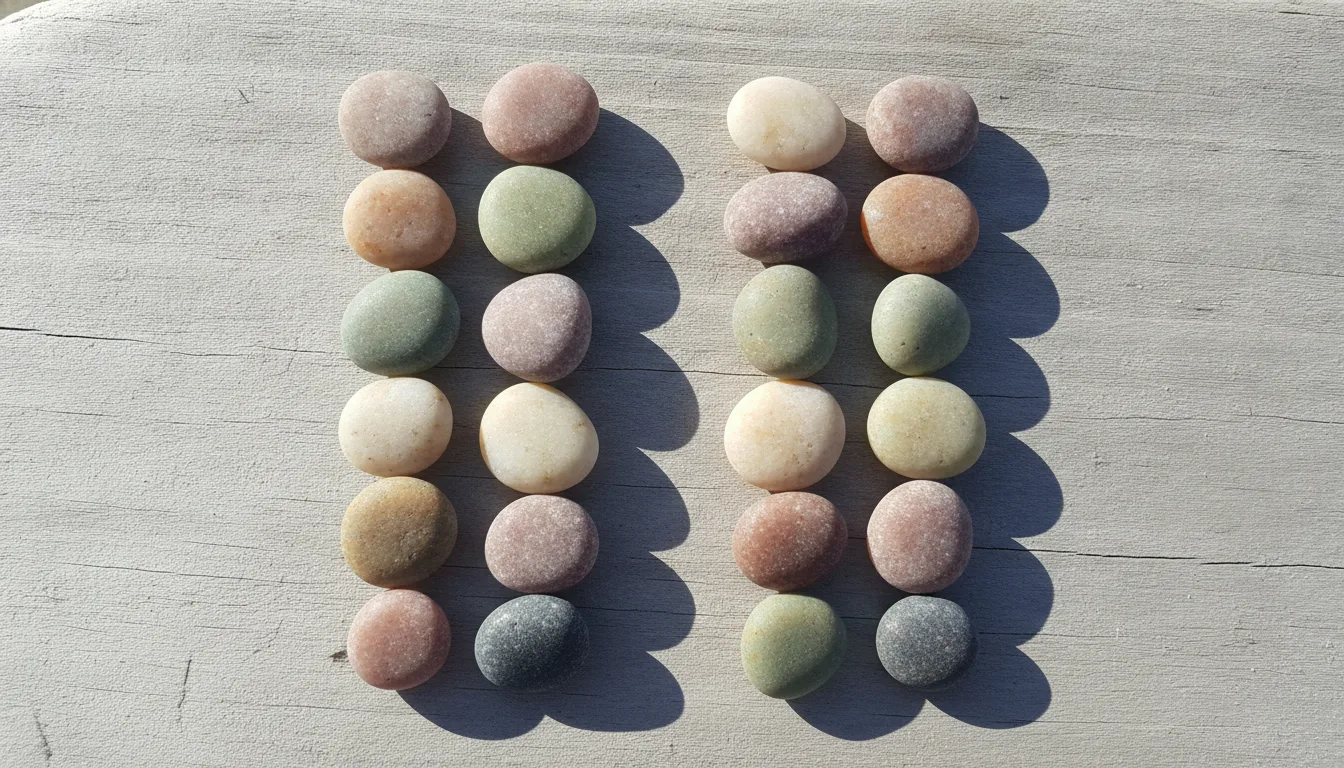
The Emotion Code chart is the map that guides every Emotion Code session. It lists 60 emotions, and a practitioner uses muscle testing to move through it until they reach the one that is ready to be released. This guide explains how the chart is laid out, how it is used in a healing session, and why you do not need to memorise it.
How the chart is laid out
The chart has two columns and six rows. Each of the twelve boxes holds five emotions, which makes 60 in total. Dr Bradley Nelson grouped the emotions by the organ or gland he associated them with, drawing on ideas from traditional Chinese medicine. For example, one box includes grief, sadness and discouragement, and another includes anxiety, fear and worry.
You do not need to agree with those associations to have a session. In practice, the chart works as an organised list that makes it quicker to find a specific emotion.
How the chart works in a session
- Is there a trapped emotion? The practitioner muscle tests to ask whether there is an emotion ready to release.
- Which column? They ask whether it is in column A or column B.
- Which row? They narrow it down to one of the six rows.
- Which emotion? They read the five emotions in that box until one tests positive.
- A little more detail. Sometimes they check roughly when the emotion became trapped, or whether it was inherited or absorbed from someone else.
- Release. The emotion is released with a magnet or a hand along the governing meridian.
This takes a minute or two per emotion, so a 60-minute session usually covers several.
Why the chart is useful
The chart keeps a session focused. Instead of guessing or talking for an hour about how you feel, the practitioner can name a specific emotion, such as “unworthy” or “abandonment”, and many people find that naming it is helpful in itself. It also means the work can be done just as easily online, because the chart is the same wherever you are.
Do I need to learn the chart?
No. Zoe will tell you which emotion came up and, if it is helpful, what it might relate to. Your session notes list the emotions that were released. If you are curious, the chart is reproduced in Dr Nelson’s book, The Emotion Code.
What if an emotion does not seem to fit?
Sometimes the named emotion makes instant sense. Other times it is puzzling at first and becomes clearer later. Occasionally it never seems to fit, and that is fine too. Muscle testing is not infallible, and Zoe does not treat it as absolute truth. You are always welcome to say what feels right and what does not.
Using the chart with Zoe
Zoe uses the chart in every Emotion Code session and in the emotional part of Body Code sessions. Sessions run for 60 minutes, in person in Peregian Beach or online by Google Meet.
The Emotion Code is a complementary wellbeing practice and is not a substitute for medical or psychological care.
Book a session with Zoe
Read about Emotion Code sessions, or book a free 20-minute intro call to ask anything first.
Sessions are a complementary wellbeing practice. They are not a substitute for medical or psychological diagnosis or treatment, and individual experiences vary.