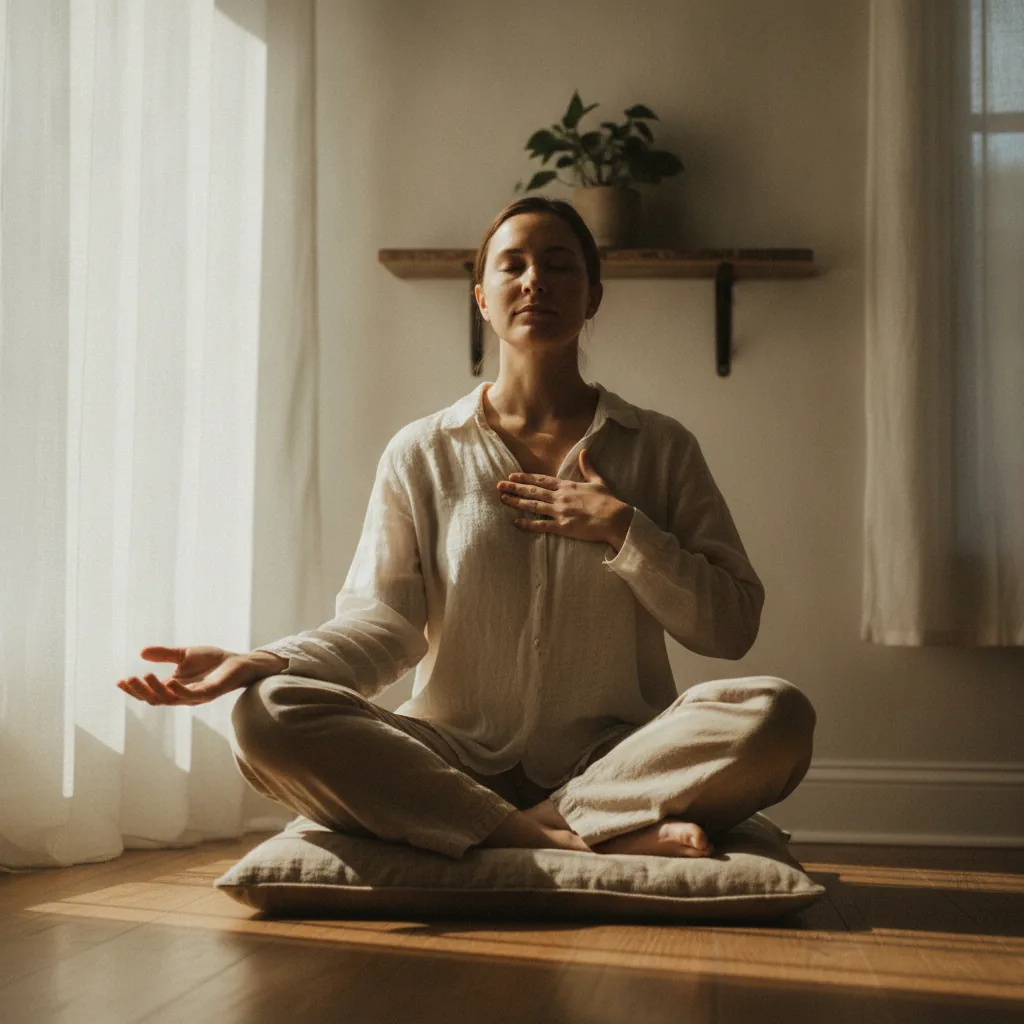
Holistic Healing Counselling: Blending Mind, Body and Energy
Holistic healing counselling is an approach to wellbeing that works with the whole person: thoughts, feelings, physical sensations and the subtle energy body. Rather than treating a symptom in isolation, it looks at how mind, body and energy influence each other, helping people move through patterns that talk therapy or medical care alone may not fully reach.
What exactly is holistic healing counselling?
Holistic healing counselling is a form of complementary support that weaves together psychological conversation, body awareness and energetic principles. It recognises that emotional pain rarely lives only in the mind, that grief can sit in the chest, that old beliefs can create physical tension, and that the body often holds what the thinking brain struggles to articulate.
Conventional counselling does extraordinary work. It gives people language, insight and a safe space to be heard. Holistic healing counselling honours all of that while also asking: what is happening beneath the words? Where does this feel stuck in the body? What belief is quietly running in the background?
This broader lens draws from several traditions. Somatic awareness, rooted in decades of research into the mind-body connection, recognises that the nervous system stores experience physically. Energetic frameworks, including those explored by practitioners of Emotion Code and Body Code, suggest that trapped emotional energy can influence how we feel and function day to day. Mindfulness-based approaches, which have a robust evidence base in contexts ranging from chronic pain to anxiety, train attention toward present-moment experience rather than looping thought.
None of these are silver bullets. Holistic healing counselling is a complementary wellbeing service, not a substitute for medical or psychiatric care. What it offers is a fuller conversation: one that includes the nervous system, the felt sense, the beliefs inherited from family or culture, and the quieter layers of experience that rarely make it into a standard appointment.
Why do so many people feel something is still missing after conventional support?
Many people who seek holistic healing counselling have already done significant work. They have seen a GP, tried a course of therapy or read every self-help book available. They understand their patterns intellectually yet keep arriving at the same place. That gap between knowing and shifting is one of the most common experiences people bring to holistic and integrative practitioners.
Part of what creates that gap is the way the nervous system learns. When the body has moved through a frightening or overwhelming experience, it encodes a survival response: a tightening, a shutdown, a hypervigilance that once made perfect sense. Understanding the origin of that response cognitively does not always dissolve it. The body needs a different kind of conversation.
Research published through the work of Dr Bessel van der Kolk, author of the widely read “The Body Keeps the Score,” helped bring this idea into mainstream awareness. Van der Kolk and colleagues documented how trauma is stored somatically and how body-based approaches, alongside or instead of purely verbal therapies, can support recovery in ways that talking alone may not. Holistic healing counselling draws on this understanding without requiring a clinical trauma diagnosis to be useful. Everyday stress, grief, burnout and relationship difficulty all involve the body, and all can benefit from an approach that includes it.
There is also the layer of belief. Many of the stories we carry about ourselves, about whether we are worthy, safe, loved or capable, were not formed consciously. They were absorbed in childhood, shaped by culture, reinforced by repeated experience. A holistic approach creates space to examine those stories gently and, over time, to loosen their hold.
What does a holistic healing counselling session typically involve?
A holistic healing counselling session is a genuinely collaborative space. It begins with listening: not just to what is said, but to what comes through in tone, in pauses, in the body. From there, the session might move through a combination of reflective conversation, grounding or breathwork practices, body-awareness inquiry, and sometimes energetic or somatic techniques depending on the practitioner and their training.
Sessions are often described by clients as feeling different from traditional counselling in pace and texture. There is less pressure to arrive at a narrative conclusion. A session might spend twenty minutes with a sensation in the throat, or with a memory that keeps surfacing, exploring what is there rather than rushing past it. That slower, more attentive quality is part of what makes the approach feel nourishing rather than depleting.
The emotional body receives real attention here. Practitioners working in this space often incorporate principles from energy-based modalities, recognising that emotions are not purely psychological events but also energetic ones that move through the body and, when they become stuck, contribute to patterns of anxiety, low mood, chronic tension or exhaustion.
It is worth noting that holistic healing counselling is broad by nature. No two practitioners work identically, which is why it matters to find someone whose training and values genuinely align with yours. Look for transparency about what a session involves, what qualifications the practitioner holds, and how they approach the boundary between complementary and clinical care.
How does holistic healing counselling complement energy healing modalities?
Holistic healing counselling and energy healing modalities like Emotion Code, Body Code and Belief Code share a foundational understanding: that the person sitting in front of you is more than a set of presenting symptoms. They are a whole system, and real support works with the whole system.
Where counselling brings the power of language, relationship and reflective inquiry, energy-based approaches work more directly with the body’s energetic field. Emotion Code, developed by Dr Bradley Nelson, uses muscle testing to identify and release trapped emotional energies believed to interfere with physical and emotional wellbeing. Body Code extends this to six categories of imbalance across the whole person. Belief Code goes further still, addressing the deep subconscious belief structures that shape how someone experiences the world.
These modalities are at the heart of the work offered at Zoe Bentley Healing, alongside yoga therapy and holistic counselling. Together they create a layered, genuinely integrative approach: conversation and insight meet energetic clearing and somatic awareness. Clients often find that movement happens more readily when multiple layers are addressed rather than just one.
Think of it this way. If you carry a belief that you are fundamentally unsafe, that belief will show up in your thoughts, in your nervous system’s reactivity, and potentially in the energy body as well. Addressing it only at the cognitive level, only at the somatic level, or only at the energetic level may produce partial shifts. Addressing all three together tends to feel more complete.
Who is holistic healing counselling most suited to?
Holistic healing counselling tends to resonate with people who are curious about themselves and open to exploring wellbeing beyond the purely clinical. They may be navigating anxiety, grief, burnout, relationship transitions, chronic stress or a general sense that something feels off that they cannot quite name. They often have some self-awareness already and are looking for a space that can meet them in the depth of that.
It is particularly well suited to people who feel that their body has a story to tell and who want support in listening to it. People who sense that old patterns, inherited beliefs or unprocessed emotion are playing a role in where they find themselves now. People who want to feel genuinely seen, not just assessed.
It is not a replacement for medication, psychiatric care or crisis support. A good holistic practitioner will be clear about this and will actively encourage you to maintain your relationship with your GP or mental health team where that support is in place. Complementary means exactly that: alongside, not instead of.
If any of this feels like it is describing you, or someone you care about, the warmest invitation is waiting for you. Book a Holistic Counselling session with Zoe Bentley Healing.