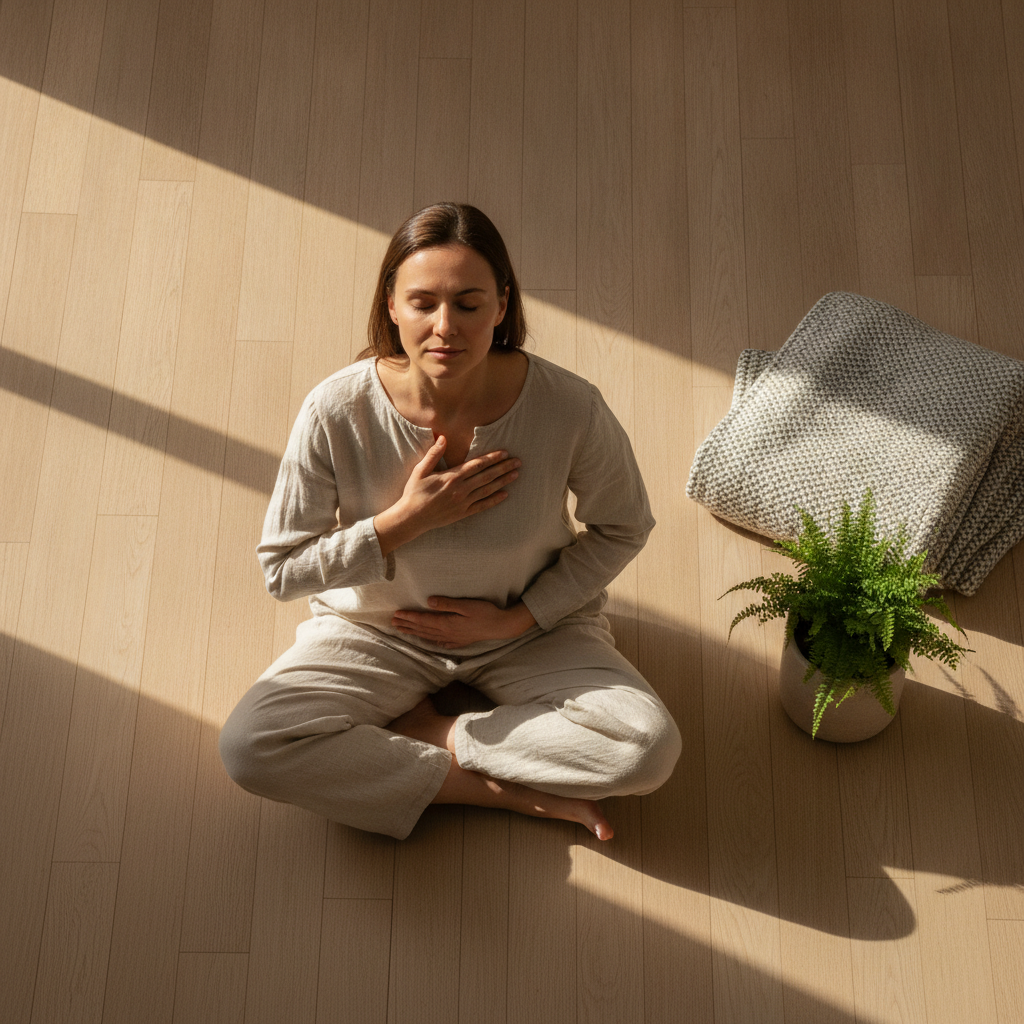
Nervous System Regulation Techniques to Try Today
Nervous system regulation techniques are practices that help shift your body out of a stress response and back into a state of safety and ease. They work by signalling to your brain that the perceived threat has passed, reducing cortisol, slowing the heart rate and returning you to a calmer, more resourced baseline. Most can be done in under five minutes, anywhere.
Why does nervous system regulation matter for everyday wellbeing?
Nervous system regulation matters because a chronically dysregulated nervous system sits at the root of many physical and emotional complaints, from persistent anxiety and poor sleep to digestive issues and a constant sense of overwhelm. When the body is stuck in sympathetic overdrive (the fight-or-flight state), healing of any kind becomes much harder. Regulation creates the internal conditions for genuine rest and recovery.
The autonomic nervous system operates in two broad modes. The sympathetic branch mobilises you for action, flooding the body with stress hormones. The parasympathetic branch, sometimes called rest-and-digest, signals safety and allows the body to repair, digest food properly and consolidate memory. Most people in modern life spend far more time in sympathetic activation than their bodies were designed for, even when there is no immediate danger present.
Polyvagal theory, developed by neuroscientist Dr. Stephen Porges, has given practitioners and clients alike a clearer language for understanding this. The theory describes a third state called the ventral vagal state, associated with social connection, curiosity and a felt sense of safety. Many of the techniques below are designed precisely to activate this ventral vagal pathway.
What are the most effective nervous system regulation techniques to try at home?
The most effective nervous system regulation techniques for home use include slow diaphragmatic breathing, physiological sighing, cold water on the face, grounding through the senses, and gentle movement. Each works through a slightly different physiological pathway, so experimenting to find what resonates with your own body is worthwhile. Even one technique practised consistently can create noticeable shifts over time.
Extended exhale breathing. The exhale activates the parasympathetic nervous system more directly than the inhale does. A simple place to start is a four-count inhale through the nose, followed by a six to eight count exhale through the mouth. Even three to five cycles of this can reduce heart rate variability stress markers. Try it before a difficult conversation, after a stressful commute or whenever you notice your shoulders creeping toward your ears.
Physiological sigh. Researchers at Stanford University, including Dr. Andrew Huberman, have identified the physiological sigh as the fastest known way to reduce acute stress in real time. It involves a double inhale through the nose (a full breath followed immediately by a short sniff to fully inflate the lungs) and then a long, slow exhale through the mouth. One to three repetitions is usually enough to feel the shift.
Five-four-three-two-one grounding. This sensory technique anchors attention in the present moment by naming five things you can see, four you can physically touch, three you can hear, two you can smell and one you can taste. It is particularly useful when anxious thoughts are pulling you out of the body and into a spiral of worry. The act of orienting to the environment through the senses signals safety to the brain’s threat-detection centres.
Cold water on the face. Splashing cold water on the face, or submerging your face in a bowl of cold water for a few seconds, activates the mammalian dive reflex, which slows the heart rate rapidly. This is a practical technique borrowed from dialectical behaviour therapy (DBT) and can be genuinely useful in moments of acute distress or panic.
Gentle rhythmic movement. Walking, swaying, rocking or light yoga are all forms of bilateral or rhythmic input that help discharge stored stress and support nervous system regulation. The rhythm itself is regulating. Notice how naturally we rock a child who is distressed, or pace when anxious. The body already knows this.
How does the body store stress and why does regulation take practice?
The body stores stress because the nervous system encodes threatening experiences as somatic memory, patterns of tension, bracing and activation held in the muscles, fascia and organs. Regulation takes consistent practice because the nervous system learns through repetition, building new neural pathways gradually over time rather than through a single insight or intervention. Think of it less like flicking a switch and more like laying a path through a field, each footstep making the route a little clearer.
Trauma researcher and psychiatrist Dr. Bessel van der Kolk famously described how the body keeps the score, holding the emotional weight of difficult experiences in its tissues long after the mind has moved on. This is why cognitive approaches alone sometimes feel incomplete for people carrying stress, grief or trauma. The body needs to be included in the healing process.
This is also why consistency matters more than intensity. Five minutes of slow breathing every morning will build more nervous system resilience over a month than an occasional hour-long practice done sporadically. The nervous system responds to repetition. Each time you bring yourself back to a regulated state, you are reinforcing the neural pathway that knows how to find that place again.
How can yoga therapy support nervous system regulation?
Yoga therapy supports nervous system regulation by combining breathwork, gentle movement, mindful awareness and body-based inquiry in a way that is tailored to the individual. Unlike a general yoga class, yoga therapy is one-to-one and shaped around your specific physiology, history and goals. It draws on the same polyvagal understanding described above, using posture, breath and attention to shift the nervous system from a state of activation into one of settled presence.
Practices like restorative yoga, yoga nidra and pranayama (breath regulation) have been used for centuries precisely because they work with the body’s own intelligence rather than against it. When a qualified yoga therapist holds this space with you, they are also offering something the nervous system responds to deeply: co-regulation. The calm, attuned presence of another person is itself regulating, which is why working one-to-one can accelerate progress in ways that solo practice sometimes cannot.
Holistic counselling can complement this beautifully. When the body has been gently settled through somatic and movement-based practices, there is often more capacity to explore the emotional and belief-level patterns that sit underneath chronic stress. The two approaches work together in a way that neither can fully achieve alone.
If you are ready to explore this work with personalised guidance, Book a Yoga Therapy session with Zoe Bentley Healing to learn nervous system regulation techniques that are tailored specifically to you and your body.