Therapeutic Yoga: Benefits, Uses and What to Expect
Therapeutic yoga is a personalised, evidence-informed practice that uses breath, movement, relaxation and mindfulness to support physical, emotional and nervous-system wellbeing. Unlike a group yoga class, it is tailored to one individual at a time, addressing specific concerns such as chronic pain, anxiety, trauma, burnout or grief, and working gently with whatever is present for that person right now.
What exactly is therapeutic yoga, and how does it differ from a regular yoga class?
Therapeutic yoga differs from a regular class in that every element, the postures, the breathwork, the pace and the language used, is chosen specifically for one person’s goals and current capacity. A group class is designed for a general population; therapeutic yoga is designed for you. Sessions often draw on multiple yoga traditions alongside trauma-informed principles, making them accessible to people who may never have tried yoga before.
In a standard vinyasa or hatha class the teacher cues a fixed sequence and students adapt as best they can. In a therapeutic setting, it is the other way around: the practice adapts to the student. That distinction matters enormously when someone is navigating injury, chronic illness, emotional overwhelm or a body that has carried long-term stress. There is no pressure to achieve a particular pose, no comparison with anyone else in a room, and no performance required. The session holds space for exactly where you are.
Yoga therapy as a formal discipline is recognised by the International Association of Yoga Therapists (IAYT), which defines it as “the professional application of the principles and practices of yoga to promote health and wellbeing within a therapeutic relationship.” That professional framing means a trained yoga therapist brings knowledge of anatomy, psychology and the nervous system into every session, not just instruction in postures.
What are the key benefits of therapeutic yoga?
Therapeutic yoga supports the body and mind in several well-documented ways: it helps regulate the autonomic nervous system, reduce perceived stress and pain, improve sleep, increase body awareness, and build a felt sense of safety and agency. Because it is individualised, the benefits are shaped around what each person actually needs, whether that is more calm, more strength, more emotional resilience or simply a way back into their own body.
Research published in journals including the Journal of Alternative and Complementary Medicine and Frontiers in Psychiatry has consistently found that yoga-based interventions reduce self-reported anxiety and depressive symptoms across a wide range of populations. A landmark 2015 study at Boston University found that a single 60-minute yoga session raised GABA levels (the brain’s primary calming neurotransmitter) significantly more than a comparable walking session, pointing to a measurable neurological mechanism behind the sense of ease people describe after practice.
Beyond the research, the experiential benefits clients frequently report include sleeping more soundly within weeks of starting, feeling less reactive in moments of stress, carrying chronic tension with more ease, and reconnecting with a sense of what their body actually needs. Those shifts are quiet, but they compound. Over time, a regular therapeutic yoga practice can genuinely change how someone moves through the world.
Some of the most common areas where therapeutic yoga is used include:
- Chronic pain and musculoskeletal conditions such as lower back pain, neck tension and headaches
- Anxiety, burnout and nervous-system dysregulation
- Trauma and post-traumatic stress (using trauma-sensitive, consent-based approaches)
- Grief, life transitions and emotional processing
- Sleep difficulties and fatigue
- Supporting recovery alongside conventional medical care
What happens in a therapeutic yoga session?
A typical therapeutic yoga session begins with a conversation about what you are experiencing and what you hope to feel by the end of the session. From there, the practitioner guides you through a tailored practice that might include gentle movement, breathwork, restorative postures, body-scan meditation or yoga nidra. Sessions are usually 60 to 90 minutes, and you leave with simple practices to continue at home between appointments.
Because no two sessions are identical, it can help to know what the general arc tends to look like. Most begin with settling, giving the nervous system a chance to arrive in the room and release the momentum of the day. This might be as simple as a few minutes of guided breathing or a body-awareness practice done lying down. From there the practitioner introduces movement that is responsive and enquiry-based rather than prescriptive: “How does this feel for you?” matters more than “Is your alignment correct?”
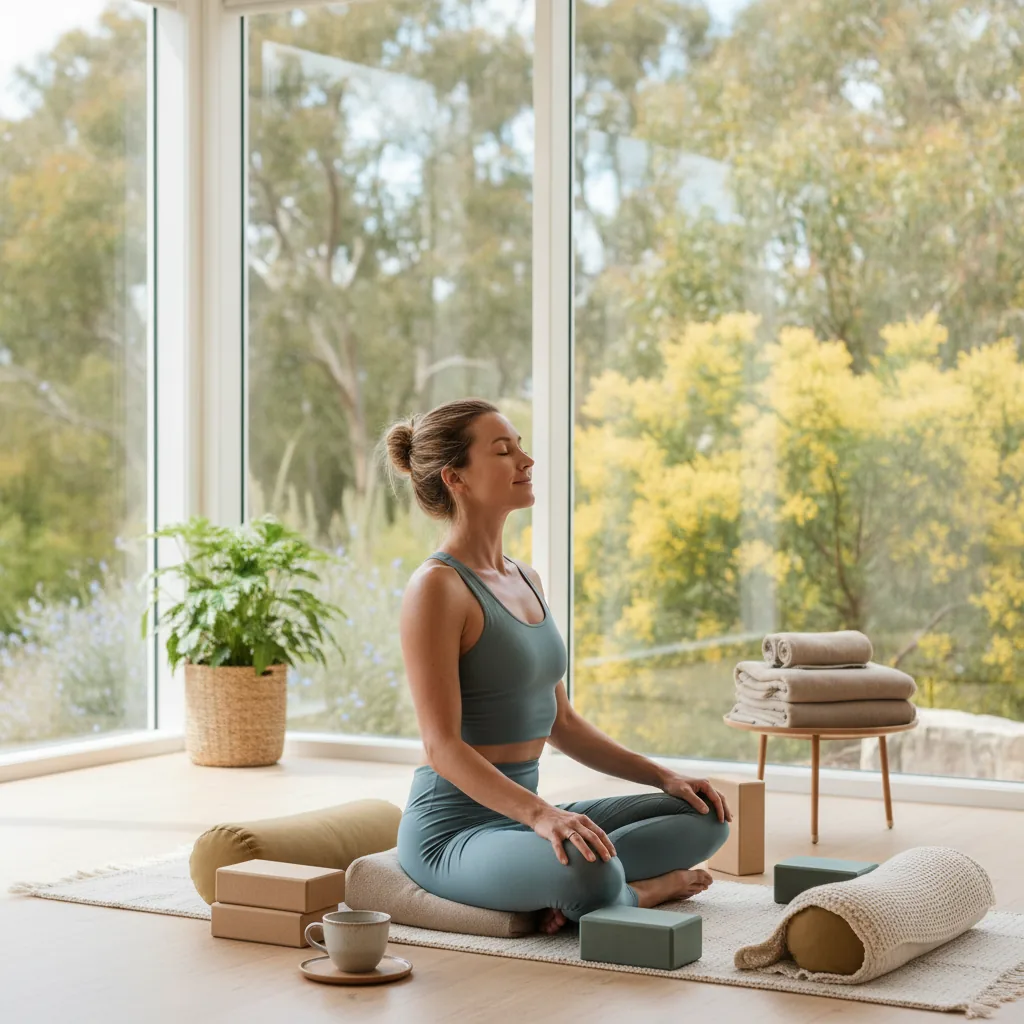
Restorative postures supported by props (bolsters, blankets, blocks) are a common feature, particularly when the goal is stress reduction or nervous-system regulation. These are held for several minutes to allow the body to genuinely soften rather than simply stretch. The session usually closes with a period of rest and integration, sometimes a short guided relaxation, so that the work done during the session has space to land.
One thing that surprises many people is how much of the session is about listening inward rather than achieving anything outward. Therapeutic yoga cultivates what teachers sometimes call interoception, the ability to notice what is happening inside the body. That capacity, once developed, becomes a resource you carry everywhere.
Is therapeutic yoga right for you?
Therapeutic yoga is worth considering if you have been managing a persistent physical complaint, feeling emotionally depleted, stuck in a stress response or disconnected from your body, and conventional approaches have only helped so far. It suits people of all ages and fitness levels, including complete beginners, because it meets you exactly where you are. The only real requirement is a willingness to slow down and pay attention.
It is not a replacement for medical care. If you are dealing with a diagnosed condition, it works best as a complement to the treatment your healthcare team has recommended, and a good therapeutic yoga practitioner will always encourage that collaboration. What it offers is something the medical system rarely has time to provide: a calm, unhurried space in which to reconnect with yourself.
Therapeutic yoga pairs beautifully with other holistic approaches. When someone is also working with emotional patterns held in the body, combining a somatic practice like therapeutic yoga with energy-based or integrative emotional work can deepen the process considerably. The body and the emotions are not separate systems, and practices that honour both tend to create the most meaningful shifts.
If you are curious about how yoga therapy might support your wellbeing alongside other holistic tools, yoga therapy is one of the core offerings at Zoe Bentley Healing. Book a One-on-One Yoga Therapy session with Zoe Bentley Healing.