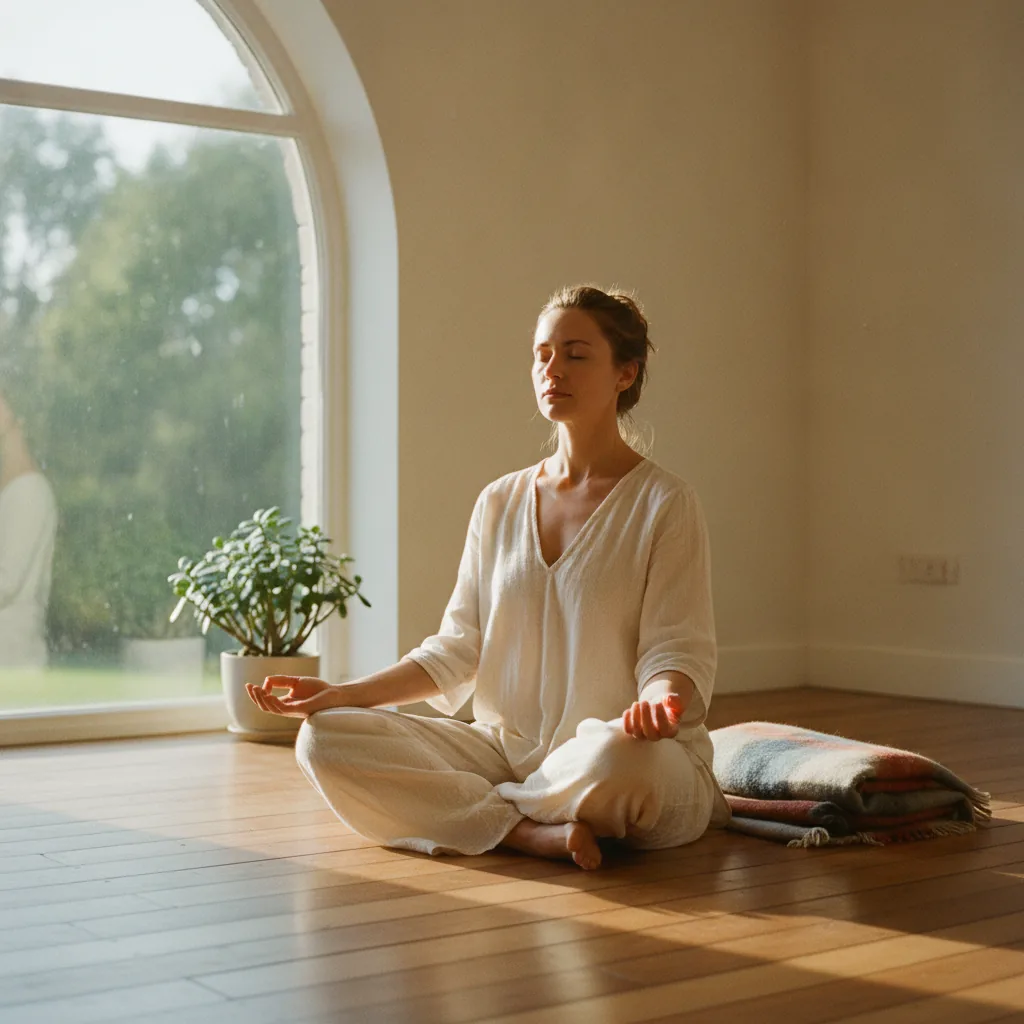
Yoga and Therapy: How Combining Both Supports Deeper Healing
Yoga and therapy work together by addressing the whole person: the body, the breath and the emotional inner world. Where talk-based approaches help you make sense of your experiences mentally, yoga creates the physical conditions for that understanding to land in the body. Used together, they open a path to healing that neither can fully offer on its own.
Why do yoga and therapy complement each other so well?
Yoga and therapy complement each other because they work on different, but deeply connected, layers of the human experience. Therapy helps you name what you feel; yoga helps you feel it safely in the body. The two approaches share the same destination, a more regulated, grounded and integrated self, while travelling quite different roads to get there.
Most of us have been taught to think our way through difficult feelings. We analyse, we reflect, we talk. That is genuinely useful work. But the body often holds experiences that words struggle to reach. A tight chest, a chronically braced jaw, a stomach that knots before nothing in particular: these are the body’s quiet records of stress, grief or old fear. Yoga, with its deliberate focus on breath, sensation and physical presence, gives those records a chance to be heard.
Research from trauma-informed clinicians, including the work popularised in books like “The Body Keeps the Score,” has reinforced what yoga practitioners have long observed: the nervous system responds to embodied practice in ways that cognitive processing alone may not reach. When breath slows and the body is invited into a pose held with gentle attention, the fight-or-flight response softens. That physiological shift creates space for therapeutic insight to settle somewhere more permanent than the thinking mind.
How does yoga support emotional processing and nervous system regulation?
Yoga supports emotional processing by activating the parasympathetic nervous system through slow, conscious breath and intentional movement. This shifts the body out of a stress response and into a state of relative safety, which is exactly the condition needed for genuine emotional processing to occur. The body relaxes its guard, and stored tension begins to release.
The breath is central to this. Practices like diaphragmatic breathing, lengthened exhalation and alternate nostril breathing directly stimulate the vagus nerve, the long wandering nerve that governs the body’s rest-and-digest state. When the vagus nerve is well-toned, people tend to recover from stress more quickly, feel more connected to others and find it easier to sit with difficult emotions without being overwhelmed by them.
This is not abstract. In a yoga practice, you might notice that holding a hip opener longer than is comfortable brings up unexpected emotion. That is not a coincidence. The hips, the psoas muscle in particular, are widely understood by somatic practitioners to be key sites where tension related to fear and chronic stress accumulates. Inviting those areas to soften, slowly and with full attention, can be a surprisingly profound act of emotional release.
Mindfulness woven through a yoga practice adds another layer. When you observe sensation without immediately reacting to it, you begin to build what therapists call distress tolerance: the capacity to experience discomfort without being swept away by it. That capacity is transferable. It shows up in conversations, in relationships and in the quieter moments when old patterns would otherwise take hold.
What is yoga therapy, and how is it different from a regular yoga class?
Yoga therapy is an individualised, therapeutic application of yoga practices, including movement, breathwork, meditation and philosophical tools, designed to support a specific person’s health, healing or wellbeing goals. Unlike a general yoga class, which offers the same sequence to everyone in the room, yoga therapy begins with you: your history, your nervous system, your body and what you are working through right now.
In a group class, the teacher is guiding a room. In yoga therapy, the practitioner is working with one person. That distinction matters enormously. A sequence can be adapted for someone recovering from grief, navigating anxiety, living with chronic pain or processing a period of significant life change. The pace, the postures, the breathwork and the reflective conversation woven through a session all respond to what that individual actually needs.
Yoga therapy is also distinct in the way it integrates the mind and body as a single system. A yoga therapist is not simply prescribing stretches. They are listening for what the body is communicating, noticing where a client holds tension, where breath becomes shallow and where presence drops away. That attunement is closer to a therapeutic relationship than it is to a fitness class.
When yoga therapy sits alongside other holistic modalities, the effect can be particularly rich. At Zoe Bentley Healing, Yoga Therapy is offered as part of a broader suite of complementary services that include Emotion Code, Body Code, Belief Code and holistic counselling. Each of these approaches speaks to the body-mind connection in its own way, and together they offer something genuinely layered: practical tools for working with the nervous system, alongside approaches that address the emotional and energetic patterns sitting beneath the surface.
Who might benefit most from combining yoga and therapy?
Anyone navigating stress, emotional overwhelm, grief, relationship difficulty or a general sense of feeling stuck in old patterns can benefit from combining yoga and therapy. It tends to be especially supportive for people who find that talking alone does not quite reach the root of what they are carrying, or for those who feel disconnected from their bodies after a period of prolonged stress.
You do not need to be experienced in yoga. Yoga therapy in particular meets you exactly where you are, whether that means sitting gently on a chair, lying supported on the floor or moving slowly through simple breathwork. The entry point is always your own body, as it is today, not some idealised version of it.
People who are drawn to a more integrative approach to their wellbeing, one that honours the physical, the emotional and the energetic, often find that the combination of yoga and therapy creates a kind of coherence in their healing. Things that felt stuck in one area begin to shift. A pattern named in a counselling conversation becomes easier to release when the body is also given tools to let go. A physical tension softened in a yoga therapy session opens space for an emotional truth to surface that had been waiting quietly for room to breathe.
Healing is rarely linear. It moves between insight and sensation, between understanding and feeling, between the story you carry and the body that has been carrying it. Bringing yoga and therapy together honours that complexity rather than flattening it into a single channel.
If something in this resonates, the next step is a simple one. Book a Yoga Therapy session with Zoe Bentley Healing.