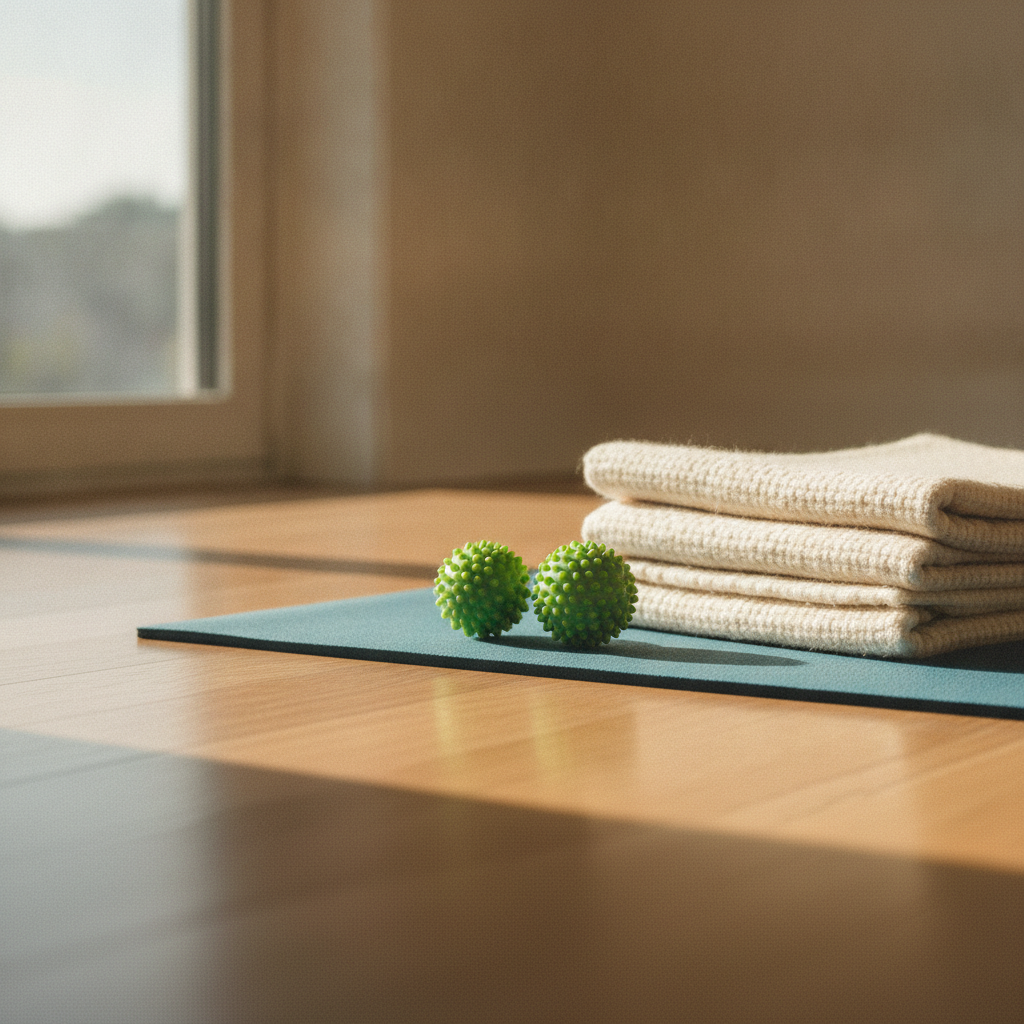
Yoga Tune-Up Balls: What They Are and How Yoga Therapy Compares
Yoga tune-up balls are small, pliable rubber balls used for self-myofascial release, targeting tight muscles and connective tissue through sustained pressure and rolling. Yoga therapy, by contrast, is a personalised, practitioner-led approach that uses breath, movement, and inquiry to address the whole person. Both tools support wellbeing, but they work at very different depths.
What are yoga tune-up balls and how are they used?
Yoga tune-up balls are grippy, slightly squishy therapy balls, originally developed by movement educator Jill Miller, designed to be rolled beneath specific areas of the body to release muscular tension and improve tissue mobility. They are used on a mat, against a wall, or on a chair, and are particularly popular for targeting the feet, shoulders, thoracic spine, and hips. Most practitioners use them in short rolling sequences of one to three minutes per area, applying bodyweight to create pressure that mimics the hands-on work of a massage therapist. The balls come in different sizes and densities, so the sensation can be calibrated from gentle to quite intense. Because they are portable and inexpensive, they have become a staple in many yoga studios and physiotherapy settings alike.
What benefits do yoga tune-up balls offer for the body?
Yoga tune-up balls work primarily through self-myofascial release, which helps soften the fascia (the connective tissue that surrounds every muscle and organ) and encourages blood flow to areas that have become restricted through repetitive movement patterns, postural habits, or stress. Regular use can reduce localised tension, improve joint range of motion, and heighten body awareness. Many people find them particularly useful for persistent shoulder or hip tightness that doesn’t fully release through stretching alone. Research on self-myofascial release tools more broadly suggests improvements in flexibility without a corresponding decrease in muscle strength, which makes them a useful warm-up or cool-down companion. They can also support proprioception, helping you notice where you habitually hold tension without even realising it.
That said, yoga tune-up balls are a self-care tool. They address the physical layer of tension, and they address it well. But they don’t have a conversation with you. They can’t notice that your shoulders crept up to your ears the moment you started rolling, or ask what was happening in your life the week the pain began.
How does yoga therapy compare to using tune-up balls for tension and pain?
Yoga therapy is a practitioner-led, evidence-informed discipline recognised by the International Association of Yoga Therapists (IAYT), and it approaches pain, tension, and imbalance through a much wider lens than physical release alone. A qualified yoga therapist conducts an initial assessment, considers the whole person including sleep, stress, breath patterns, emotional landscape, and lifestyle, and then builds an individualised therapeutic programme rather than offering a generic class or a rolling sequence.
Where tune-up balls are brilliant at softening a tight quadratus lumborum or a contracted plantar fascia, yoga therapy asks why that area keeps holding on. Chronic tension is rarely just physical. It is often tied to nervous system dysregulation, habitual breathing patterns that keep the body in a low-grade stress response, unprocessed emotion, or movement patterns learned so long ago they feel like personality rather than habit. Yoga therapy works with all of these threads together.
A one-to-one yoga therapy session might include:
- Breath awareness and pranayama practices tailored to your nervous system state
- Therapeutic asana adapted to your specific body, not a generic class sequence
- Somatic inquiry that explores the connection between physical sensation and emotional experience
- Guided relaxation and yoga nidra to support the parasympathetic response
- Simple home practices, which might well include tools like tune-up balls as part of a broader programme
The two approaches are not in competition. Many people find that rolling out tight tissue with tune-up balls before or after a yoga therapy session actually deepens the work, because the body arrives softer and more receptive. Think of tune-up balls as a helpful daily self-care ritual and yoga therapy as the deeper enquiry that helps you understand the pattern underneath the tension.
When might you benefit from yoga therapy rather than just self-massage tools?
If you have been living with a nagging area of tension that keeps returning no matter how diligently you roll, stretch, or rest, that persistence is often a signal worth paying attention to. The same is true if physical symptoms are accompanied by fatigue, anxiety, difficulty sleeping, or a sense of being stuck in your body. These are the situations where a personalised, therapeutic approach tends to make the most meaningful difference, because they involve the nervous system and the whole person, not just a specific patch of tight tissue.
Yoga therapy is also a thoughtful choice if you are recovering from injury, managing a chronic health condition, navigating a significant life transition, or simply wanting to build a sustainable, embodied relationship with your own wellbeing rather than chasing symptom relief. It offers something that no tool, however well designed, can offer on its own: a skilled, attentive human presence that holds space for your full experience.
There is also something worth naming about body literacy. One of the quieter gifts of yoga therapy is that it builds your capacity to listen to yourself. Over time, you develop a finer, more compassionate awareness of how your body communicates, which makes you far more effective with any self-care practice, including tune-up balls, breathwork, or movement at home.
How do you get started with yoga therapy?
Getting started is simpler than many people expect. A first session typically begins with a relaxed conversation about what you are experiencing, what you have already tried, and what feels most pressing. From there, your yoga therapist builds a picture of where you are and begins to shape a therapeutic approach that fits your body, your nervous system, and your life. There is no requirement to already have a yoga practice or to be flexible. Yoga therapy meets you exactly where you are.
If you have been exploring self-care tools like yoga tune-up balls and are ready to take the work deeper, personalised therapeutic support can offer the next layer of understanding and lasting change.
Book a Yoga Therapy session with Zoe Bentley Healing for personalised therapeutic support.