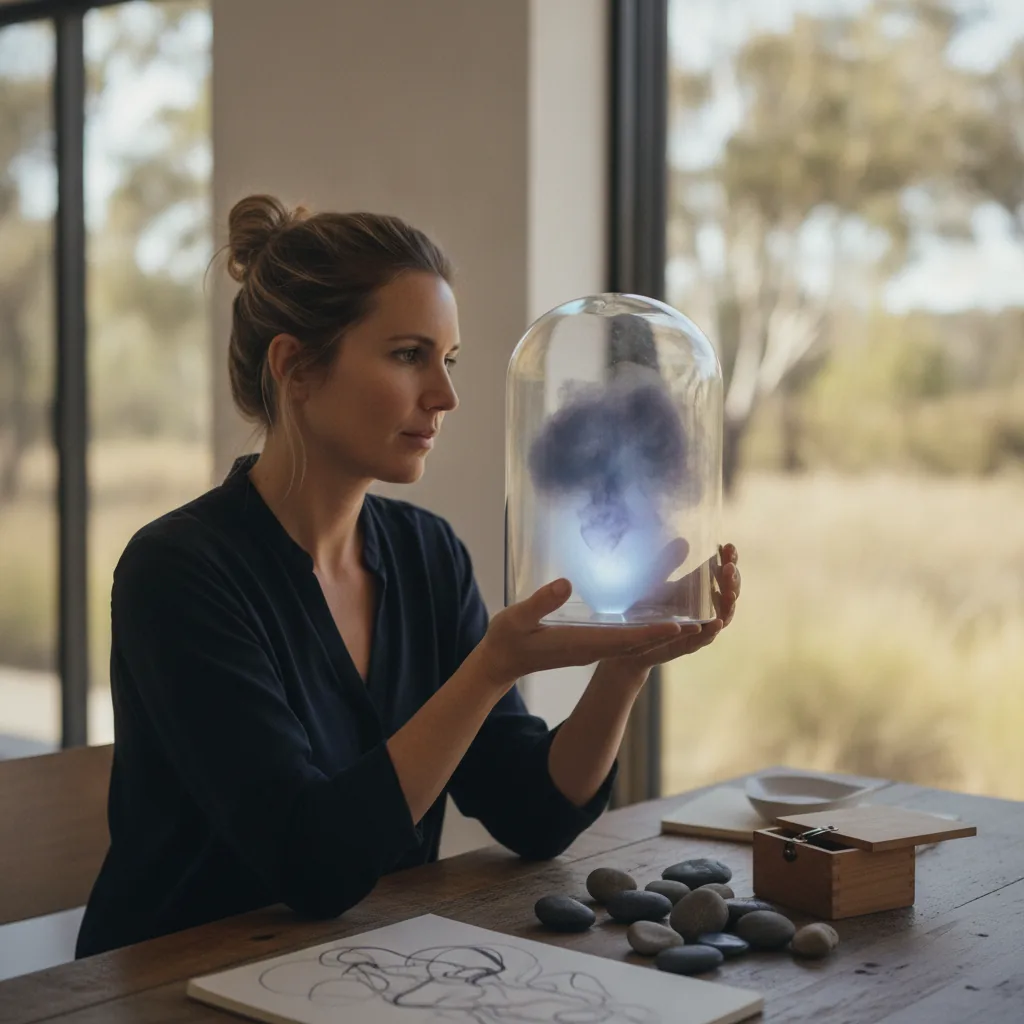
Trapped Feelings: What They Are and How to Release Them
Trapped feelings are emotional energies that become lodged in the body when an emotion is experienced but not fully processed. Rather than passing through naturally, the emotional charge gets stuck, quietly influencing your physical sensations, thought patterns and behaviours long after the original event has passed. Understanding them is the first step toward genuine release.
What exactly are trapped feelings, and why do they happen?
Trapped feelings form when the body experiences an emotion so quickly, so intensely or in such an overwhelming moment that it cannot complete its natural cycle. The emotional energy becomes stored in the tissues, organs or energy field of the body rather than being fully felt and released. This can happen in childhood, during stressful life events or even in moments that seem minor at the time.
Think of an emotion as a wave. When you are fully present and safe enough to feel it, the wave rises, crests and settles. But when life moves too fast, when you are told your feelings are too much, or when the situation simply demands you keep going, the wave stalls mid-rise. The energy does not disappear. It compresses and lodges somewhere in your body, waiting for the conditions to finally move through.
Dr Bradley Nelson, developer of the Emotion Code, describes these stored energies as “trapped emotions” and identifies them as one of the most significant and least recognised sources of physical discomfort and emotional reactivity. His research and decades of clinical work suggest that the body holds a vibrational record of every emotion that has not been fully processed, and that these records can be identified and released.
Common causes include grief that had no space to be expressed, anger that felt unsafe to voice, fear experienced in childhood before the nervous system had the resources to integrate it, and heartbreak that arrived before you had the tools to move through loss. You may not consciously remember these moments, but the body does.
How do trapped feelings show up in everyday life?
Trapped feelings often surface as recurring emotional patterns, unexplained physical tension or a persistent sense that something is “off” even when life looks fine on the outside. They can show up as anxiety that has no obvious cause, tightness in the chest, low-grade sadness, difficulty trusting others or a tendency to react more strongly than a situation seems to warrant.
You might notice them as the knot in your stomach before a conversation that should feel ordinary. Or the heaviness that settles in your chest for no clear reason on a Tuesday afternoon. Or the way a particular topic always seems to trigger a bigger emotional response than you would expect. These are not signs that something is fundamentally wrong with you. They are signals that something old is ready to move.
Physically, people sometimes report that trapped feelings correlate with chronic tension in specific areas of the body. The shoulders carry burdens we have taken on for others. The jaw holds words we never said. The heart area is often the home of grief, loneliness or disconnection. This is not metaphor alone. When emotional energy is stored in tissue, it can affect how that tissue functions over time.
The patterns tend to become most visible in relationships. If you carry a trapped feeling of betrayal from an old friendship, your nervous system may scan for danger in new connections even when none is present. If you hold grief that was never given room to breathe, intimacy can feel quietly threatening. Trapped feelings do not stay neatly in the past. They travel into the present with you.
Can trapped feelings be released, and what does that process look like?
Yes, trapped feelings can absolutely be released. The process generally involves identifying the specific emotional energy that is stored, acknowledging it without needing to re-live the full story around it, and then using a targeted technique to help the body let it go. Many people report feeling noticeably lighter, calmer or clearer within hours or days of a release session.
There are several approaches that practitioners and researchers have explored over the years. Somatic therapies work with the body’s physical sensations to allow stalled emotional cycles to complete. Breathwork can create the physiological conditions for stored energy to surface and shift. EMDR, originally developed for trauma, helps the brain reprocess memories that have been frozen mid-integration.
The Emotion Code, developed by Dr Bradley Nelson, takes a specific energetic approach. Using muscle testing (a form of applied kinesiology) as a biofeedback tool, a practitioner identifies which trapped emotion is ready to be addressed, the approximate age at which it formed and whether it belongs to the person themselves or was absorbed from someone close to them. This last point surprises many people: we can actually absorb the emotional energies of parents, caregivers or partners, carrying feelings that were never originally ours to begin with.
Once identified, the trapped feeling is released by running a magnet or the hand along the governing meridian, a central energy pathway in traditional Chinese medicine that runs along the spine. The process is gentle, non-invasive and can be done in person or at a distance, because the work is happening at an energetic level rather than a purely physical one.
What makes the Emotion Code particularly accessible is that you do not need to narrate the full story of a painful memory for it to be released. The body already holds the record. The practitioner works with that record directly, which means sessions can feel both efficient and surprisingly tender.
How do you know if trapped feelings might be affecting you?
Some of the clearest signs include emotional reactions that feel disproportionate to the present moment, a sense of heaviness or stagnation that lifestyle changes alone do not shift, recurring physical tension without a clear structural cause, and difficulty moving forward from events that happened years ago. If you feel like you keep circling the same patterns in relationships or mood, trapped feelings may be part of the picture.
It is worth saying clearly: exploring trapped feelings is a complementary wellbeing practice. It works beautifully alongside conventional medical or psychological care, not instead of it. If you are navigating a mental health condition, please continue working with your qualified healthcare team. Energy work and emotional release practices can support overall wellbeing as one piece of a broader picture of care.
A gentle starting point is simply to notice. The next time you feel an emotion arise, especially a familiar one, see if you can allow it a little more space instead of immediately moving away from it. Ask yourself: does this feeling belong entirely to right now, or does it have older roots? That curiosity alone can begin to soften the grip of what has been stored.
Over time, releasing trapped feelings tends to create a quieter internal landscape. Reactions become more proportionate. Energy that was being used to keep old emotions suppressed becomes available for the things that genuinely matter to you. Relationships begin to feel safer. The body starts to carry less unexplained tension. It is a gradual process, not a single dramatic moment, but many people describe it as coming home to themselves in a way they had forgotten was possible.
If you are curious about what might be held in your own body and ready to explore releasing it gently and effectively, Book an Emotion Code session with Zoe Bentley Healing.